Category Archives: Thermo-slider

Thermocoax joins in Europe’s NIPSE project which targets the novel integration of system equipment on next-generation aircraft engines

Press Release    logo NIPSE


26 November, 2015

The challenges of equipment integration on future aircraft engines – particularly next-generation Ultra-High Bypass Ratio (UHBR) powerplants – is the focus of a three-year European Union-funded technology project now underway with 10 companies and organisations.

Called nipse (Novel Integration of Powerplant System Equipment), this programme addresses installation limitations expected in such future engines, including the thinner nacelles and larger fan modules ; along with architectures that require more functionality and provide extra thermal constraints through lower ventilation capability and reduced volume availability.

In this context, the NIPSE project seeks to find better placement options for equipment, using locations in the engine, the nacelle and the aircraft itself. NIPSE also addresses the need to improve thermal management of integrated powerplant systems (IPPS).

NIPSE is targeting potential engine fuel savings of up to 2-3 percent, gained through a 15-percent reduction of equipment volume for the UHBR engine, along with weight savings and improved thermal management on the more integrated powerplant systems. Additionally, a reduction of development time for the installation of powerplant systems is anticipated.

We, THERMOCOAX, participates to improve fire detection technology and the implementation of these sensors on the engine or nacelle.

Established within the European Commission’s Horizon 2020 Programme, NIPSE is funded at 6.2 million euros and has a three-year duration from its formal kickoff last June. It is managed by the Commission’s INEA (Innovation and Networks Executive Agency), with Aircelle (Safran) as the programme leader in its role as industrial coordinator.

Contact :

Iain Minton, NIPSE project coordinator
iain.minton@aircelle.com

The NIPSE consortium :

Safran Aircelle (France) ; ARTTIC (France) ; Thermocoax SAS (France) ; Stichting Nationaal Lucht- En Ruimtevaartlaboratorium (The Netherlands) ; Compañía Española De Sistemas Aeronáuticos (Spain) ; BAE Systems (Operations) Limited (UK) ; Meggitt Aerospace Ltd. (UK) ; Safran Snecma (France) ; Safran Labinal Power Systems (France), Archimedes Center for Innovation and Creation (Greece).


This project has received funding from the European Union’s Horizon 2020 research and innovation programme under grant agreement No. 636218
 

THERMOCOAX Aircraft Products – Bleed Air Leak Detector – NEGACOAX©

TECHNICAL DESCRIPTION

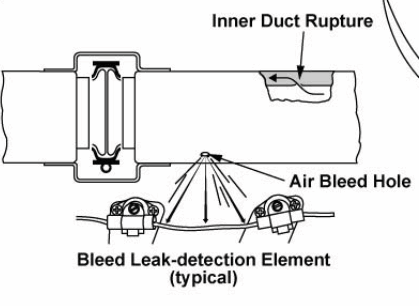
The THERMOCOAX Bleed Air detector is designed to detect leaks in an aircraft’s pneumatic duct system by sensing the temperature of the overheated air surrounding the leaking duct.

The NEGACOAX technology gives the location of the overheat condition, annunciates the overheat to the aircraft’s crew warning system.

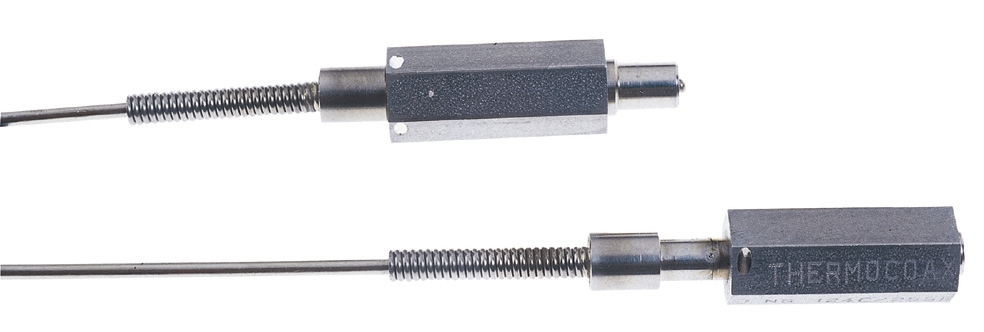
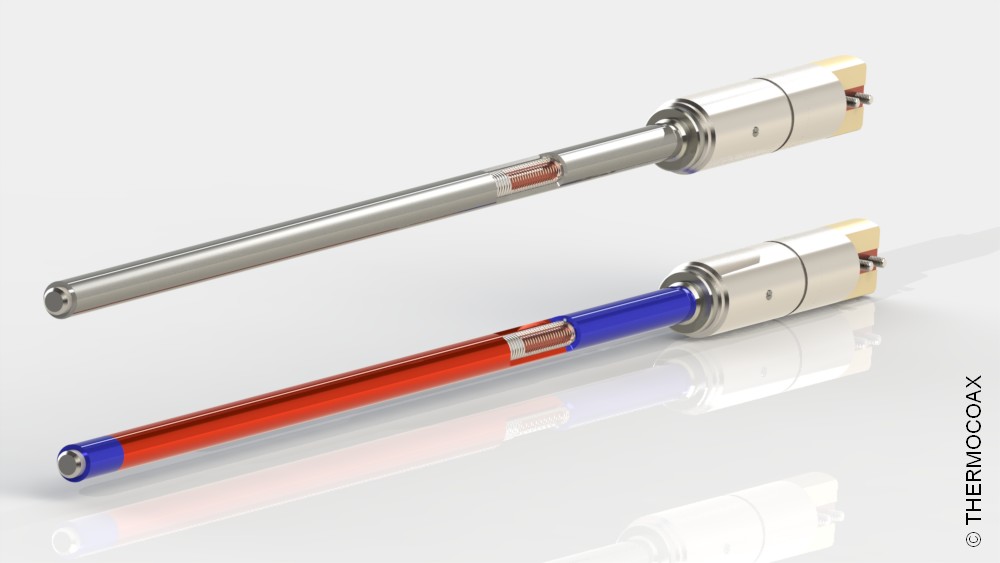
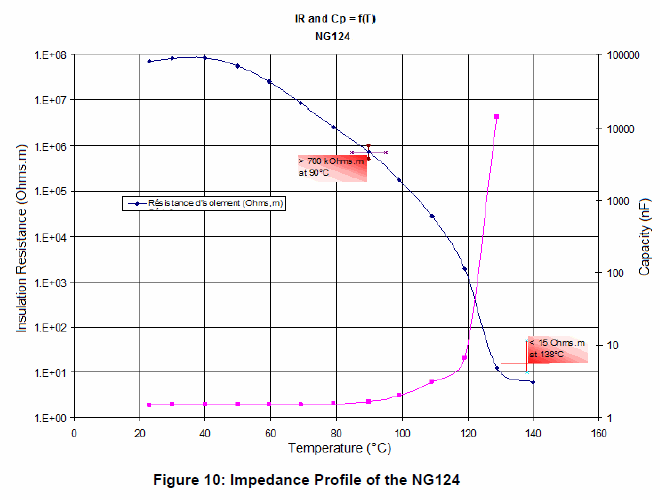
The NEGACOAX consists in a homemade Mineral Insulated Cable, doped with eutectic salts. When the NEGACOAX detects an overheat (air leakage) the cable Impedance value will drop down and the capacitance value will increase very fast.

03-08-2015 16-37-35

Example of curve with NEGACOAX NG124 :

03-08-2015 14-22-33


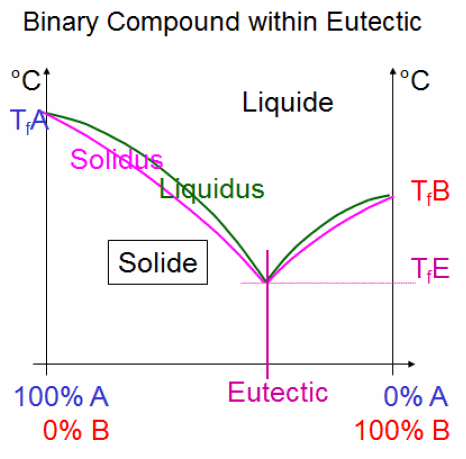
The THERMOCOAX’s current technology uses the Binary compound within Eutectic as described below, in others words, liquidus and solidus will melt entirely at the same temperature.

This specificity gives the high accuracy of this technology :

03-08-2015 14-16-09

Insulated Cable homemade manufacturing, this technology offers a high reliability and nearly no maintenance.

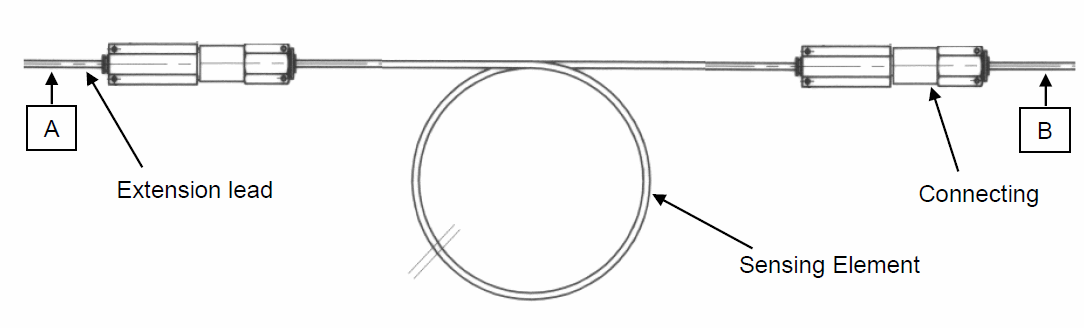
The maximum length of each NEGACOAX detector is 5 meters. We have no length limitation regarding the number of detector connected together to make a complete loop.

THERMOCOAX’s NEGACOAX detectors are typically installed at heat critical points throughout the aircraft structure. Typically, these are located in the wings, engine pylon, fuselage, empennage and tail cone (APU compartment).

This technology can be applied to military, commercial transport and general aviation aircraft.

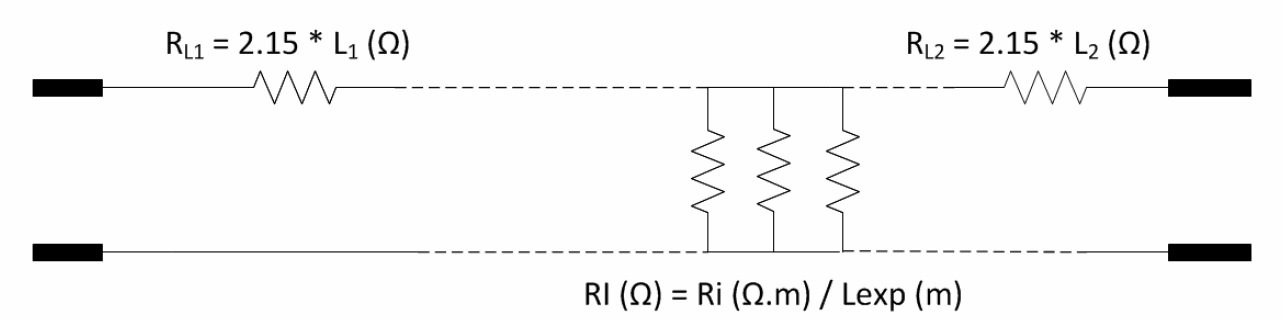
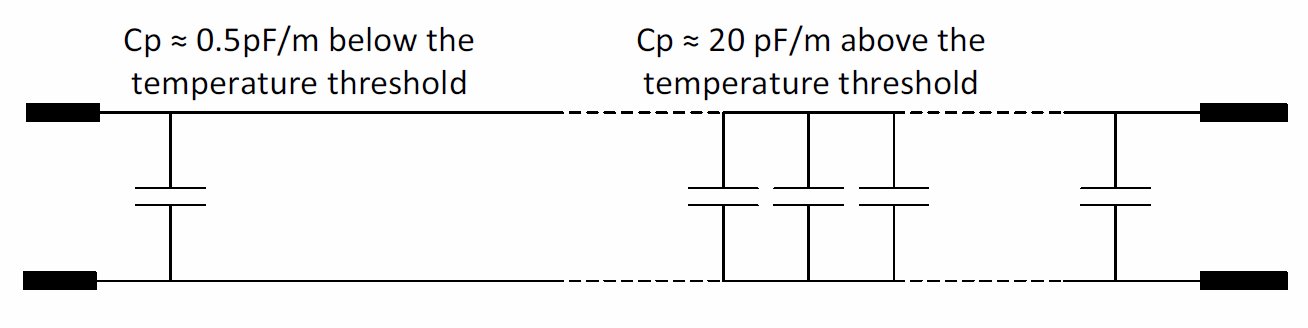
The electronic control system associated will get 2 separated electrical parameters :

  • Impedance

03-08-2015 14-48-03


  • Capacitance

03-08-2015 14-47-00

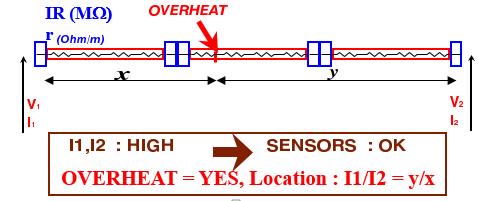
By connecting both ends of the NEGACOAX loop with the electronic system, the leakage location can be determined by current ratio.

e

NEGACOAX Detector Characteristics

  • Nickel Sheath
  • Insulant: Al2O3 + eutectic salts
  • Constantan conductor
  • Line resistance at 20°C: 2,15±0,05Ω/m
  • Diameter Ø2,2mm +0,2/-0,4
  • Length L<300cm ±6mm
  • Length 300cm<L<460cm +19/-0
  • Max detector Length 460cm
  • Mass=25gr+(27*L)gr with L= length in meter
  • Service Life: 20 years
  • MIL and RTDO 160 standard
  • 100 000 Flight hours
  • MTBF > 300*106 hours
  • FMEA 1.954*10-7 Failures/FH


Appl-092a

03-08-2015 15-45-58

NEGACOAX Product Ranges :

  • NG124
  • NG154
  • NG180
  • NG204
  • NG215
  • NG232

Thermocoax has a large experience on aircraft platform with :

  • McDonnel Douglas MD90
  • Airbus A340
  • Dassault Falcon F5X
  • Embraer KC390
  • Bombardier Global Express
  • Airbus Helicopter

Accessories

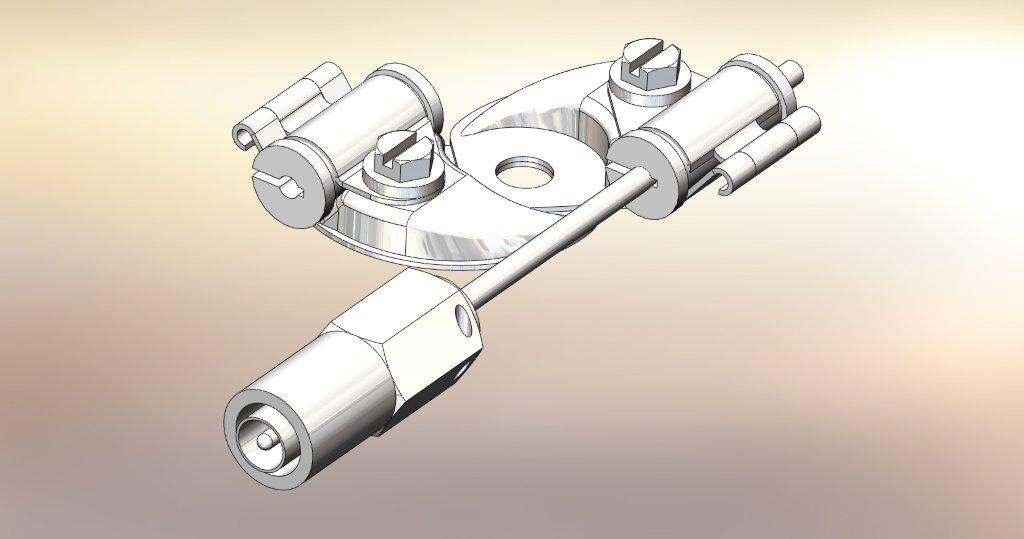
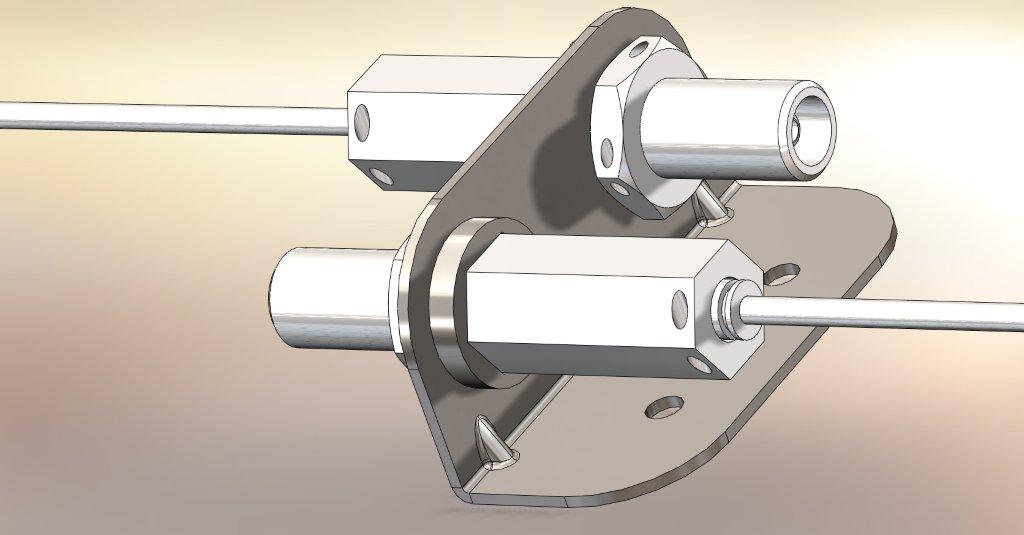
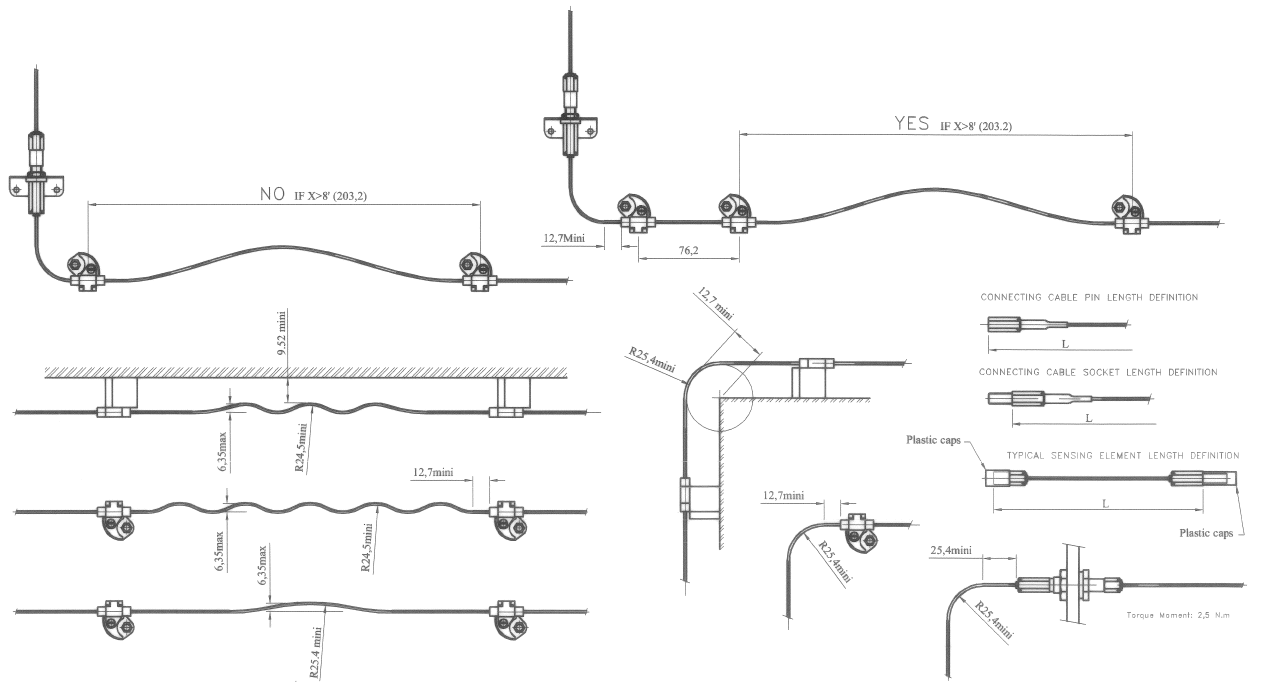
Thermocoax supplies a large range of accessories to fix the detectors on the aircraft structures

Mechanical System for :

1 or 2 loops :

303 925    303 925 (3)

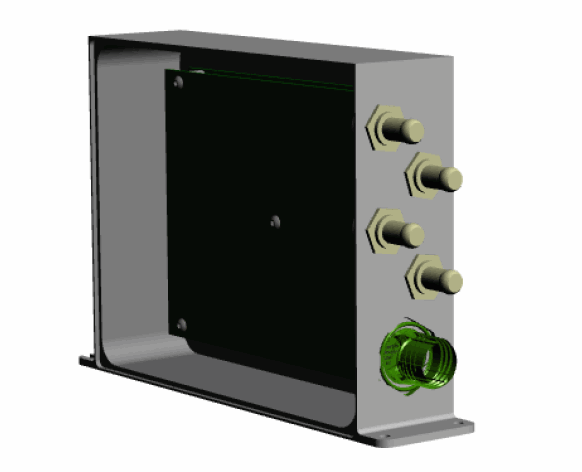
Electronic System

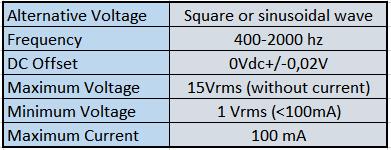
NEGACOAX is compatible with any electronic system with the following characteristic :

tab

Thermocoax is working in partnership with aircraft industry electronic specialist.


06-10-2015 17-05-06


Test Loop

Thermocoax offers as option an upgrade of the detector with integrated shunt resistor in the connector. This shunt (>30KΩ) is connected between the core and the sheath.

Installation

03-08-2015 16-51-26


Corrosion Cracking of Pressurizer Heaters in Nuclear Power Plants

Introduction

Pressurizer heaters in Nuclear Power Plant are subjected to the most severe working conditions in the primary loop. They cumulate mechanical, thermal and electrical stresses.

Since the nineties, incidents of pressurizer heaters using 316L grade sheath tube in nominal primary water environment cracking have been encountered in many Nuclear Power Plants (Pressurized Water Reactor type).

This kind of incident is very detrimental in heaters due to possible leakage and dissolution of the MgO in the primary coolant. Costly unplanned downtime cannot be avoided.

Destructive testing has been conducted on damaged heaters to determine the origin of cracking.

In parallel, an R&D program has been implemented in order to understand the micro-mechanics and to determine the key factors for the occurrence of Primary Water Stress Corrosion Cracking (PWSCC) at 680 °F (360°C).

Based on this understanding of failure mechanisms, a program of experiments jointly run by EDF R&D and CEIDRE in collaboration with Thermocoax was conducted in order to develop a thermal treatment by induction heating.

The aim was to reduce the susceptibility to Stress Corrosion Cracking of the sheath material of pressurizer heaters while maintaining the electrical properties of mineral insulating material.

 The challenge : develop an efficient solution for pressurizer heater while maintaining superior reliability.

The challenge was to develop an efficient solution while maintaining the outstanding electrical performance over time of Thermocoax pressurizer heaters.

Due to its  53 nuclear power plants- EDF has compiled an impressive and unique database on the performance of standardized components over decades (year x experience). Thermocoax pressurizer heaters have demonstrated a superior electrical performance over time compared to other technologies over tens of thousands years of operational experience in nuclear power plants.

Nuclear safety had to be taken into consideration and the impact of modifications minimized to avoid “new” causes of failure. Thereby our approach was to define a thermal treatment having no possible effect on the insulating material of the heater.

From R&D to industrialization

Heat treatment modeling and laboratory tests conducted by EDF’s R&D enabled the feasibility and the efficiency of this kind of heat treatment by induction to be demonstrated.

Qualification tests helped in determining the key parameters for good results, in terms of hardness and residual stresses.

Thermocoax has implemented a fully automated superficial heat treatment by induction that meets EDF requirements in terms of distribution of hardness.

The new process was qualified on December 2010 and several hundreds of pressurizer heaters have been delivered to date.


The benefits of  pressurizer heaters Thermocoax technology combined with the EDF patented solution.

The surface annealing process based on induction heating developed to reduce the surface cold working and the residual stresses avoid any initiation of PWSCCwhile maintaining the electrical properties of the mineral insulating material.

A fully automated surface heat treatment by induction that meets EDF requirements in terms of distribution of hardness is now in operation.

EDF promotes safer power plants through risk mitigation and continuous improvement policies.  Despite a patent protecting this innovative thermal treatment, EDF encourages THERMOCOAX from proposing this solution to others utilities.

Four major international players have been persuaded so far and have replaced their equipment with our pressurizer heaters treated against Stress Corrosion Cracking.

THERMOCOAX PRZ heater design :

  • “Solid” construction with enhanced thermal conductivity
  • Thermal treatment and ultimately designed not to expand.

l

THERMOCOAX and pressurizer heaters

Thermocoax has been continuously producing pressurizer heaters over the last 40 years and has the largest installed base in the world. Heaters can be designed and manufactured as replacements for installed heaters supplied by the same electrical and mechanical interface.

Our pressurizer heaters are eligible for all PWR designs with benefits such as:

  • rugged construction
  • compliant with construction codes
  • qualified thermal treatment
  • reduced MgO content
  • ultimately no expansion

Thermocoax has implemented two different quality assurance systems: ASME and ISO. Both systems have been audited and approved by major nuclear power plant builders.

If you need any further information, please contact :

sales@thermocoax-nuclear.com


Thermocoax IR sources with metallic shield for non-contact and low-pollution plastic welding – White paper

Introduction

We have received an order from our automotive customers wishing to weld plastic complex shapes (2D & 3D) with non-contact IR sources.

IR welding was chosen because they needed to weld without introducing polluting particles into the weld bead (due to PA66 35% GF), a process which could modify the properties of the material and possibly pollute the future content of the welded element (Conformity to Euro 6 standard). With the IR welding process, the weld bead offers a higher bursting strength.

The solution has to be easily implemented on a production line, be accurate and reliable,  be adaptable to complex 2D & 3D geometry shapes and requires little maintenance.

It was difficult to find a conventional welding solution that meets all those parameters, especially in terms of welding of complex shapes, low-pollution welding and reliability over time.

The Challenge: The Metallic Shielded IR Source for clean welding

The challenge for Thermocoax was to design an IR source able to lower this pollution rate and generate a clean welding solution, with low maintenance.

The Thermocoax innovation team designed an IR source using Thermocoax’s Mineral Insulated Cables Technology, which meets customer needs. It can be easily implemented in a production line, and is accurate and reliable over time.

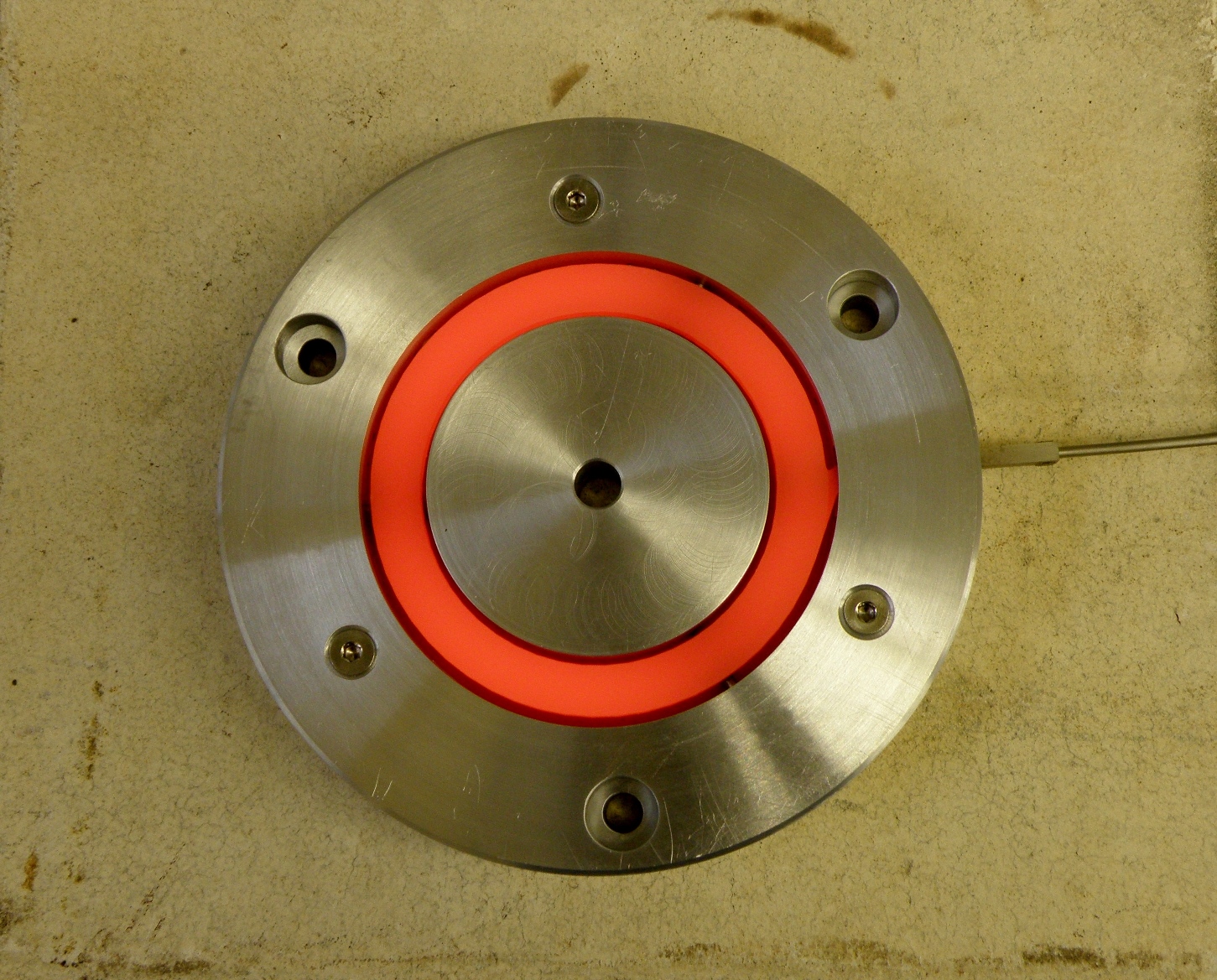
The infrared sources (heating elements at a temperature of 850°C) are placed a few millimetres from the 2 elements to be welded. When the welding zones reach their melting temperature, the IR source is removed. The two parts are then pressed against each other to complete the weld.

The benefits of Thermocoax Shielded IR Sources

 Advantages of Thermocoax IR sources heating elements :

  •  Ability to follow complex 2D & 3D forms
  • The Thermocoax IR sources’ emission wavelengths match perfectly with the major plastic absorption wavelength range.
  • Welding materials acceptable: thermoplastics, polyethylene, PVC, polypropylene, composite reinforced plastics, polyamides &c.
  • Low electrical consumption
  • Fast temperature ramp-up
  • Electrically insulated and low leakage current
  • Low maintenance required
  • Soundless


Main heating parameters for obtaining high quality non-contact IR welding :

Homogeneity of shielded IR source

  • Due to their specific design, the Thermocoax Mineral Insulated Cables have the advantage of generating a uniform temperature.
  • The design of the Metallic Shield specifically developed by Thermocoax plays an important role in ensuring uniformity of the IR emission sources.

The IR source Shield, made of a specific alloy, resists chemical attacks caused by projection of plastic and fibre glass particles. Thanks to the Metallic Shield IR innovative technology, the source retains its physical properties throughout the welding cycle and over time. Low maintenance is required.

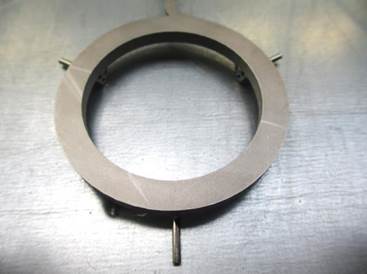
Image1    OLYMPUS DIGITAL CAMERA

The binding system used to fix the sources and the brackets have  been specially designed to reduce thermal bridges while retaining mechanical robustness.

  • Thermal regulation is achieved with a thermocouple inserted inside the IR source. It prevents temperature deviation.

An innovative Metallic Shield

The metallic structure developed by the Thermocoax Innovation Team to manufacture the shielding of the IR source allows complex 2D & 3D geometrical shapes to be produced.

Dimensional accuracy

The IR Shielded Sources are sized at both high and low temperature to anticipate expansions of materials and maintain perfect alignment at 850°C with the element to be welded. The dimensional accuracy of the IR source allows heating specifically at the weld bead location.


Conclusion

The Thermocoax Shielded IR Sources meet the requirements of non-contact clean welding.

Because of the shield structure and innovated design, the Thermocoax Shielded IR Source is a powerful plastic welding technology offering high performance industrial welding solution over time.

The Thermocoax non-contact IR welding solution is clean and homogeneous, the weld bead looks good to the eye, and the welding has no impact on the colour of the materials – Low maintenance required.


Specifications and Applications of Metallic Shield IR sources

  • Mechanical accuracy
  • Fusion of complex shapes (2D & 3D)
  • Small bend radius IR design
  • Low pollution, high bursting resistance
  • Width of seam from 2-6 mm
  • Dedicated to major plastic materials

These sources are used primarily in the automotive, medical and packaging industries and can be adapted to suit other industrial sectors.

Due to NDAs signed with our customers we are unable to present our 3D Specific Metallic IR Sources in this white paper – For all your requests, please contact us at : www.thermocoax.com
Phone : +33 141 388 061 – e-mail : nathalie.delattre@thermocoax.com


Twisted MI cable against magnetic interferences

Thermocouple & Transmission cables for sensors in harsh environment and high magnetic interferences

Sensors manufacturer are looking for extension cables offering:
The lowest perturbation on sensor’s signal
A life time superior to the life time of the sensor itself.
If cable/sensor are exposed to adverse conditions like heat, fire, pressure, radiation or electro magnetic interferences, cabling solutions using organic compound do not offer sufficient life time nor maintain screening performance of measurement chain.

Turbines, large scientific instrument, fusion reactor, induction motors

Our nuclear experience initiated in the 50’s was the opportunity for a continuous improvement of the manufacturing technics of the Mineral Insulated cable.

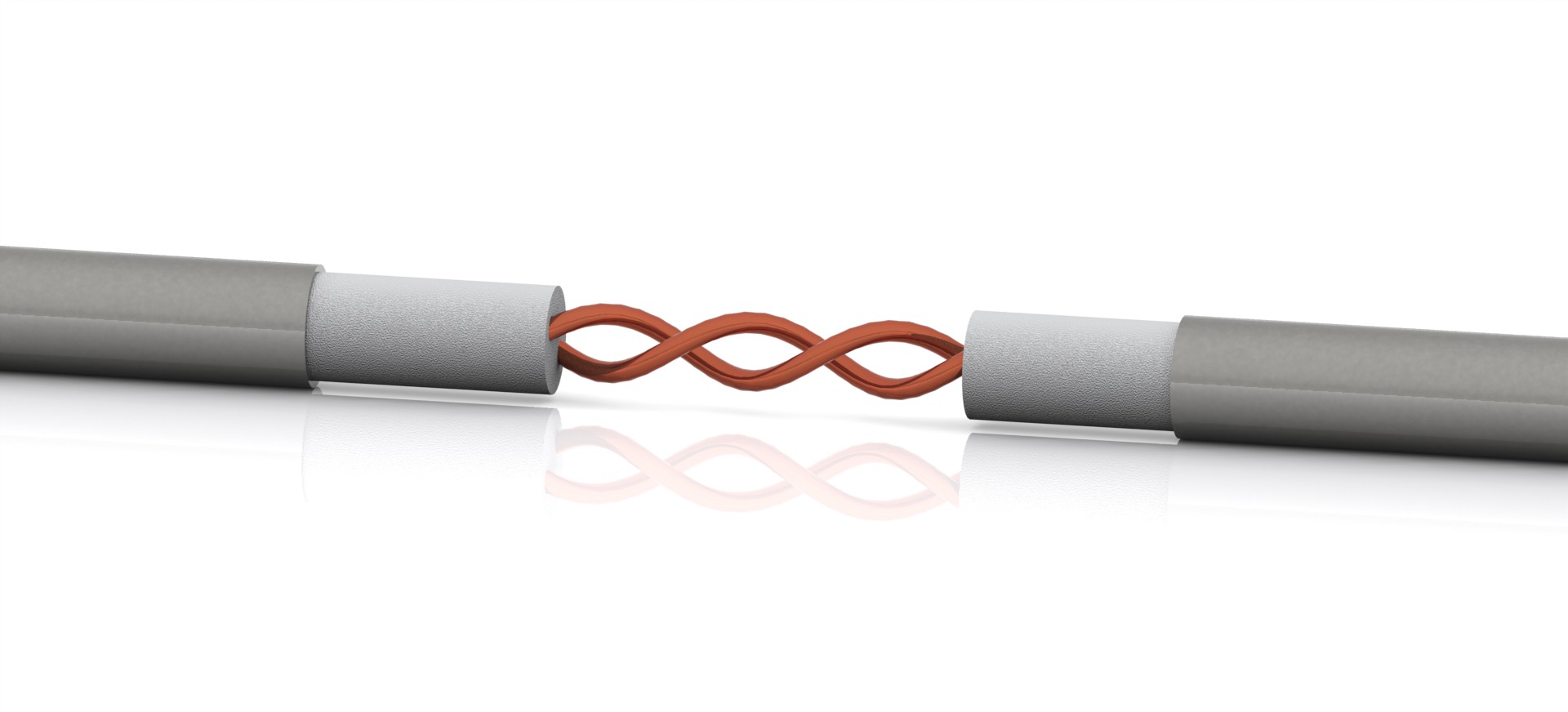
As an answer to growing demand for cables insensitive to magnetic interferences, THERMOCOAX has developed a unique process to guarantee a steady twist of the cable conductors enhancing the EMC noise rejection characteristics.

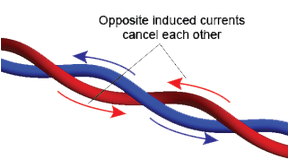
A constant pitch of the twist of conductor pair cancel the induced currents and balance capacitances to ground..

The stainless steel sheath and –if required- additional layer of soft iron- provides a superior EMC screening than other cable systems.

twisted 5

TWISTCOAX®

  • Cable design tailored to meet customer’s demand
  • Built on specification
  • Single pair or multiple pairs
  • No impact on outer sheath metallurgy
  • No organic compound: no thermal or radiation ageing
  • Cost effective process compared to others technologies

Image1

Advantage of the twisted pair in high magnetic environment:

  • successive half-twists (pitch 2,5 cm / 1 inch) reduce magnetic noise by a factor higher than 100 compared to straight type
  • Balanced capacitances to ground